
Business Income
Our goal is to help families achieve sustainable self-sufficiency through income generated by a caregiver business.
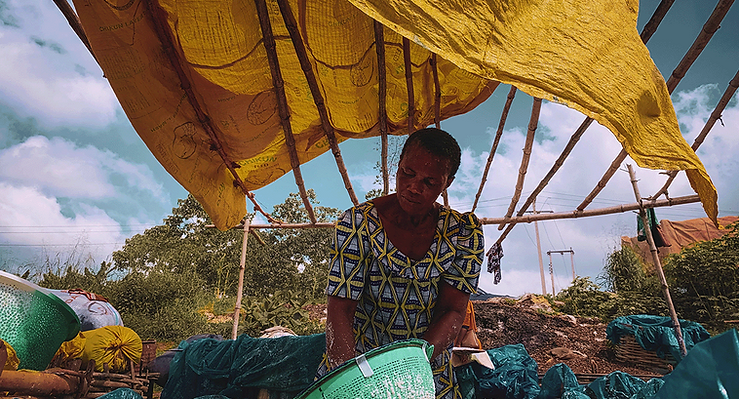
Sustaining a Family

Impoverished Reality
There are many ways to define poverty: earning below $3.65/day in the U.S., $3.00/day based on 2025 UNSDG standards, and, according to the UN, extreme poverty at $2.15/day. We may agree that all levels are extreme, with families barely meeting basic food and shelter needs. In Tanzania, 74% of rural people are below the extreme line, surviving on less than $670 per year.* Kulea Villages is trying to change this, especially for households led by single women.

Community Support
We collaborate with caregivers, community leaders, and local social workers to identify a business that meets a need and that the community can support. We work closely with the community Mjumbe leader to support our caregivers and their businesses.
Our support includes extensive caregiver training, mentoring, and, in many cases, support for initial inventory. We have also found that these caregiver business owners are often vocal supporters of others in life skills and business support.

Entrepreneur Training
Before a caregiver starts a business, they will complete a training course. This includes identifying a good business opportunity, managing inventory, finding community support, handling funds and savings, and planning resources for growth.
Future owners conduct a hands-on market survey in their community and develop a business plan. Both are necessary steps to starting their own business, developing ownership, planning finances, and building leadership skills for success.
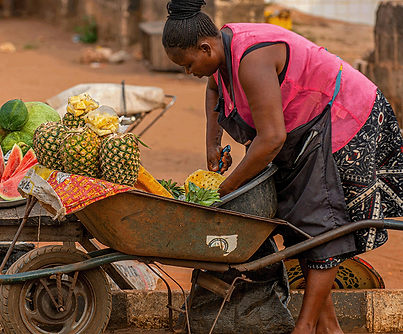
Inventory Funds
Rather than providing cash, Kulea Villages walks alongside caregivers, helping them find initial supplies needed and learn to negotiate so they can launch their businesses successfully. We discuss business expansion in our training and they start a savings plan on the first day of the business. Caregivers have full ownership of their business, and when ready to expand or add more inventory, they use their savings.
During the first few months, we continue to address home crisis needs, such as food, or rent for the home, so that savings can be maintained initially for the caregiver's business expansion.

Coach - Mentor
Kulea Villages mentors caregiver business owners during the first six months of operation. We visit the new business, including surprise visits by our social workers and a community leader, during which we cheer them on, review record-keeping and savings levels, and discuss challenges that they may be facing. We maintain communication with families for at least 6 months to provide ongoing coaching, mentoring, and problem-solving as needed. This initial mentoring period may be extended if the business is not yet generating the family's planned income.

Community Impact
We have begun to see the impact of life skills training, preventive health training, and business-building support in the communities we serve.
When Kulea Villages began, we felt that a focus on child education was the way to develop future leaders. But since adding a focus on caregiver education in both life skills and entrepreneurial skills, we have seen a two-fold impact on our children and their communities. Having a parent who is confident and believes in continuous learning helps a child want to excel, too.