
Dedication to the Kulea Villages Families with Quiet Faithfulness in Uncertain Times

Updated: Sep 25
Recently, in July, we feared a repeat of what happened after national elections in Tanzania

last October. Daily life changed very quickly. The atmosphere was tense, but we were lucky in July, with not much disruption to daily life. Still, it reminded me of those difficult weeks, and I wanted to share the story.
During that time, citizens were advised to stay home until areas were confirmed safe. Roads became quiet as movement was monitored by police. Shops closed. Travel slowed to almost nothing - only critical travel was allowed. Buses were parked. Many highways were closed. Families stayed inside and waited for normal routines to resume. For most people, this meant postponing errands, work, and school.
When Babies Can Not Wait
For infants who depend on the weekly nutrition we provide, waiting was not possible. At Kulea Villages, nearly sixty babies rely on infant formula each week because their mothers are unable to breastfeed due to illness, recovery, or loss. Missing even a short period can quickly place a baby at serious risk. Just before the election, we advised families that we were giving out 2 weeks of formula as a precaution so they would not need to travel to our center during the election week. That precaution was a blessing. When movement stopped, and uncertainty loomed, our question became:
How do we feed babies next week and in the weeks following?
Feeding Babies During the Crisis

During those weeks, our center did not operate in its usual way. Instead of a full staff, sometimes only one team member would open the office center for only a few hours. Families did not come with babies. There was no normal program of teaching, singing or counseling. To reduce travel and exposure, a strong relative — often a brother, uncle, or aunt — would travel by motorcycle to collect the week’s supply and return home immediately to the caregiver and child.
Communication happened by phone, encouraging caregivers to send someone to collect formula for the next 2 weeks. We scheduled arrivals at different times for safety. We prepared
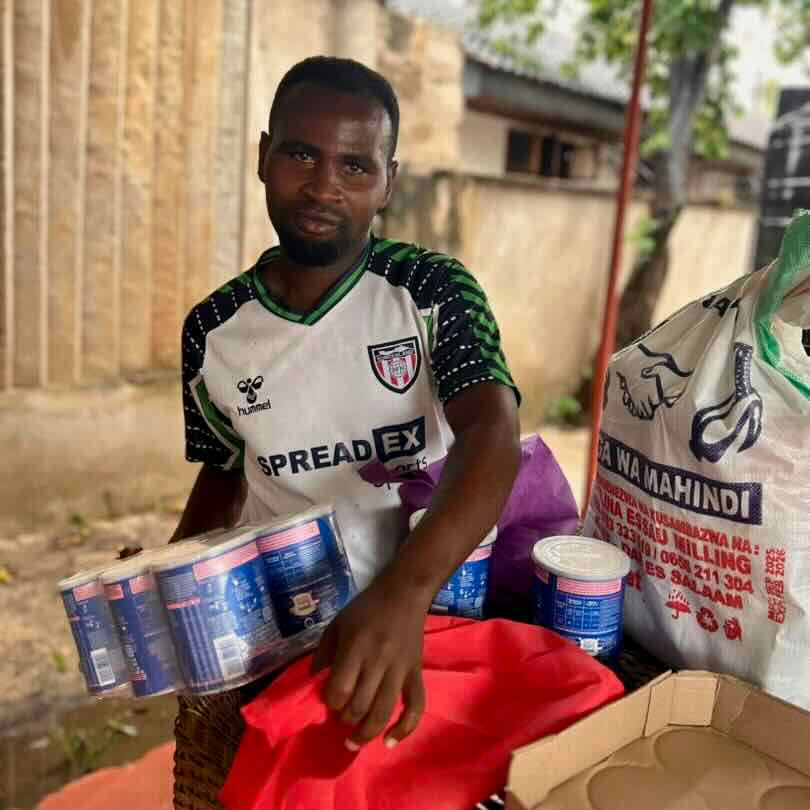
documentation for formula distribution in advance. We shortened visits to only what was essential. Every small adjustment allowed babies to continue receiving consistent nutrition while remaining safely at home.
The Cost of Showing Up
Our staff members were living the same reality as everyone else. They were concerned for their own families. They were listening to updates. They were waiting, just like their neighbors, for confirmation that normal movement could resume.

And yet — week after week — they chose to go. Quietly. Carefully, with police permission. Without attention. Not because they were curious to go out and see what was happening, but because formula is the only appropriate food for a young baby if breastmilk is not available. For three to four weeks, this rhythm continued until communities were declared safe and ordinary routines resumed.
What Our Tanzanian Team Revealed
Those weeks were difficult, yet our staff members put families first.
Programs are designed on paper. Policies are written in meetings. But care is carried out by people. There was a shared understanding: If we can safely reach the center, we will make sure the babies are fed.
And they did. Every week. Every child. Not one was lost.
Grateful for Our Tanzania Team
I am deeply grateful for our Tanzanian team — for their wisdom, their caution, and their selfless compassion. They respected guidance given to communities while still bravely going out to ensure families had what they needed to protect their babies.

The weeks were quiet. The work was steady. Calls were made from our homes to check on babies and plan for formula collection and to check on sponsored children. Sometimes the most meaningful service is not loud or visible. Sometimes it is faithfulness in small rooms, on empty roads, and in ordinary acts of care and bravery.
Our next blog article (in two weeks) will focus more on feeding the babies. Hope you'll follow along so you don't miss it.
About Deborah
Deborah Brown Magaya is the Founder and Executive Director of Kulea Villages. A former teacher and school administrator, she founded Kulea Villages in 2009 after God called her to serve vulnerable children in East Africa. Deborah is passionate about keeping children with their families whenever possible and considers it a privilege to witness God's faithfulness through the lives transformed by Kulea Villages.
Kulea Villages
Kulea Villages is a U.S.-registered 501(c)(3) nonprofit organization in partnership with Kulea Villages entities in Tanzania and Kenya. Rather than dramatic rescues, their child protection model focuses on stabilizing families through a process that typically lasts 1-2 years, prioritizing education, nutrition, and family income generation. Join our email list for new blog alerts. We appreciate your support.


Comments